

Blog
Top Cybersecurity Tips for Everyday Users

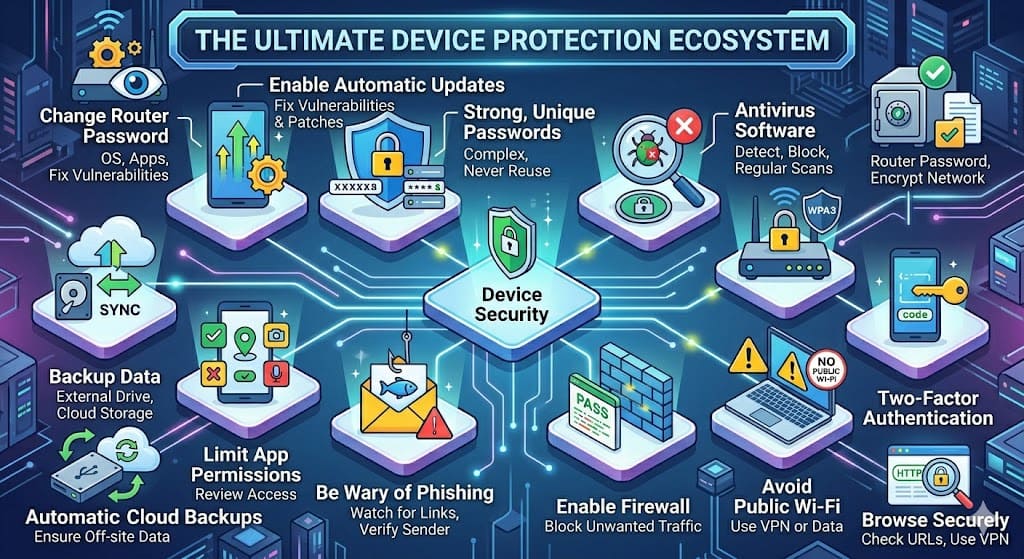
In an increasingly connected world, cybersecurity is no longer just a concern for businesses or IT professionals. Everyday users are equally at risk as more personal information is stored, shared, and accessed online. From social media accounts to banking apps, your digital presence holds valuable data that hackers are constantly trying to exploit. The good news is that staying safe online does not require advanced technical skills. By following some practical and consistent habits, anyone can significantly reduce their risk of cyber threats.
One of the most fundamental practices in cybersecurity is using strong and unique passwords for every account. Weak or reused passwords are among the easiest ways for attackers to gain access to your data. A strong password should be long, unpredictable, and include a mix of uppercase and lowercase letters, numbers, and symbols. Instead of trying to remember multiple complex passwords, many users rely on password managers, which securely store login details and even generate strong passwords automatically.
Another essential tip is enabling two-factor authentication wherever possible. This adds an extra layer of protection by requiring a second form of verification in addition to your password. Even if someone manages to steal your login credentials, they will not be able to access your account without the second authentication step. This simple feature can greatly reduce the chances of unauthorized access.
Keeping your devices and software updated is equally important. Updates are not just about new features; they often include critical security patches that fix known vulnerabilities. Cybercriminals actively search for outdated systems to exploit, making it crucial to install updates as soon as they are available. Enabling automatic updates ensures that your devices remain protected without requiring constant attention.
Being cautious while browsing the internet is another key aspect of staying secure. Many cyberattacks rely on tricking users through phishing emails, fake websites, or malicious links. These scams are designed to look legitimate, often mimicking trusted companies or services. It is important to verify the source of any message before clicking on links or downloading attachments. If something feels suspicious or urgent without reason, it is better to ignore it.
Using secure and trusted networks also plays a significant role in cybersecurity. Public Wi-Fi networks, such as those in cafes or airports, are often not secure and can be exploited by attackers to intercept data. Avoid accessing sensitive information like banking or personal accounts while connected to public Wi-Fi. If necessary, using a virtual private network (VPN) can add a layer of encryption and make your connection more secure.
Installing reliable antivirus and security software provides an additional defense against threats. These tools help detect and block malware, spyware, and other harmful programs before they can damage your device. Regular scans and real-time protection features ensure that your system is continuously monitored for suspicious activity.
Backing up your data regularly is a habit that can save you from major losses. In cases of malware attacks, device failure, or accidental deletion, having a backup ensures that your important files are not permanently lost. Cloud storage and external drives are common backup options that provide both convenience and security.
Managing app permissions is another often overlooked aspect of cybersecurity. Many applications request access to personal data, location, camera, and other features that may not be necessary for their functionality. Reviewing and limiting these permissions helps protect your privacy and reduces the risk of data misuse. It is also a good practice to uninstall apps that are no longer needed.
Lastly, staying informed and aware is one of the most powerful tools in cybersecurity. Threats are constantly evolving, and being aware of common scams and attack methods helps you recognize potential risks early. Simple awareness can prevent many attacks that rely on human error rather than technical vulnerabilities.
Cybersecurity is not about one single action but a combination of habits that work together to protect your digital life. By using strong passwords, keeping systems updated, staying cautious online, and securing your data, you can build a solid defense against cyber threats. In a world where digital interactions are a part of daily life, taking these steps ensures that you remain safe, secure, and in control of your personal information.
