

Blog
Beginner’s Guide to Building a Smart Home

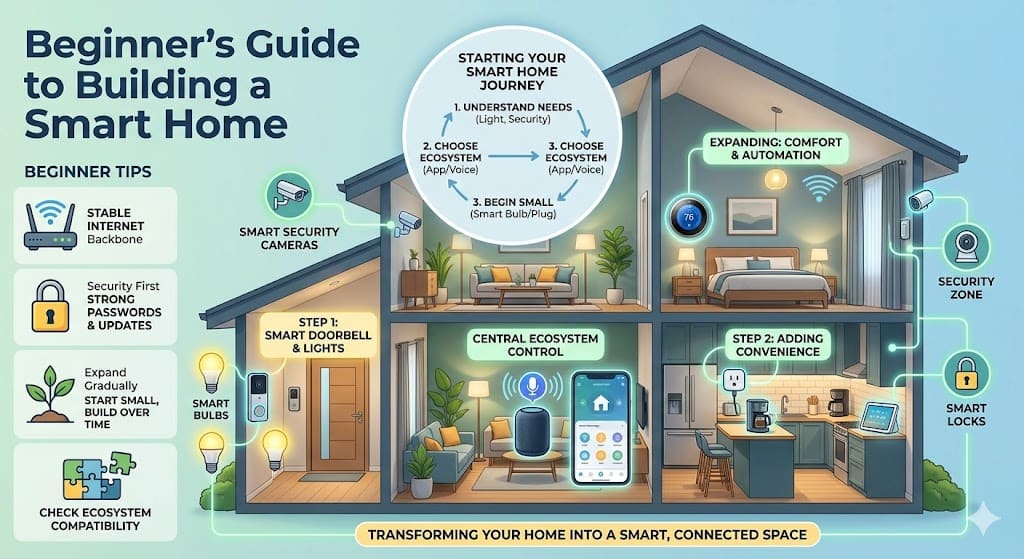
Creating a smart home may sound complex at first, but with the right approach, it can be a simple and rewarding process. A smart home allows you to control devices like lights, security systems, appliances, and even entertainment systems using your smartphone or voice commands. Beyond convenience, it also improves energy efficiency and enhances security. For beginners, the key is to start small, understand your needs, and gradually build a system that fits your lifestyle.
The first step in building a smart home is understanding what you actually want to automate. Many people make the mistake of buying multiple devices without a clear plan, which often leads to compatibility issues and unnecessary expenses. It is better to begin with one or two essential areas such as lighting or security. For example, smart bulbs or smart plugs are easy to install and allow you to control your home’s lighting remotely. Similarly, starting with a basic security camera or smart doorbell can immediately improve your home’s safety.
Choosing the right ecosystem is another important decision. A smart home ecosystem refers to the platform that connects and controls your devices. Popular ecosystems include voice assistants and mobile apps that allow centralized control. When selecting devices, it is important to ensure they are compatible with the ecosystem you choose. This helps avoid the frustration of having devices that cannot communicate with each other. A unified system makes your smart home more efficient and easier to manage.
A stable and strong internet connection is the backbone of any smart home. Since most smart devices rely on Wi-Fi, poor connectivity can affect their performance. Before adding multiple devices, make sure your home has good network coverage in all areas. If needed, consider upgrading your router or using range extenders to ensure consistent connectivity. A reliable network ensures that your devices respond quickly and work smoothly without interruptions.
Security should always be a priority when building a smart home. While these devices offer convenience, they are also connected to the internet, which makes them potential targets for cyber threats. Setting strong passwords, enabling two-factor authentication, and regularly updating device firmware can help protect your system. It is also a good idea to secure your home Wi-Fi network with modern encryption to prevent unauthorized access.
As you become more comfortable, you can expand your smart home by adding more advanced devices. Smart thermostats help regulate temperature and reduce energy consumption, while smart locks allow you to control access to your home remotely. You can also integrate motion sensors, automated curtains, and smart appliances to enhance convenience. Over time, these devices can be connected to create automation routines, such as turning off lights and locking doors automatically when you leave home.
Ease of use is something that beginners should always keep in mind. A smart home should simplify your life, not make it more complicated. Choose devices with user-friendly apps and simple setup processes. Many modern devices come with step-by-step instructions, making installation easy even for non-technical users. Starting with simple devices builds confidence and helps you understand how smart systems work together.
Budget planning is also important when building a smart home. It is easy to get carried away with the wide range of available products, but not all of them are necessary in the beginning. Focus on devices that offer real value and solve specific problems in your daily life. Gradually upgrading your system allows you to spread out costs while ensuring that each addition is meaningful.
Another key aspect is automation. One of the biggest advantages of a smart home is the ability to automate tasks. For instance, you can set schedules for lights to turn on at sunset or program your security system to activate at night. Automation not only saves time but also improves efficiency and enhances your overall living experience. As you explore more features, you will discover how automation can simplify everyday routines.
Building a smart home is a journey rather than a one-time project. Starting with basic devices, ensuring compatibility, maintaining a secure network, and expanding gradually will help you create a system that is both practical and efficient. With the right approach, even beginners can transform their homes into smart, connected spaces that offer comfort, convenience, and peace of mind.
