
Blog
Things to Check Before Buying Security Devices

In today’s world, investing in security devices has become a necessity rather than a luxury. Whether you are protecting your home, office, or shop, the right security system can provide peace of mind and safeguard your valuable assets. However, with so many options available in the market, choosing the right device can be confusing. Many people make quick decisions based on price or appearance, only to realize later that the device does not meet their actual needs. Taking the time to evaluate key factors before making a purchase can help you avoid such mistakes and ensure long-term satisfaction.
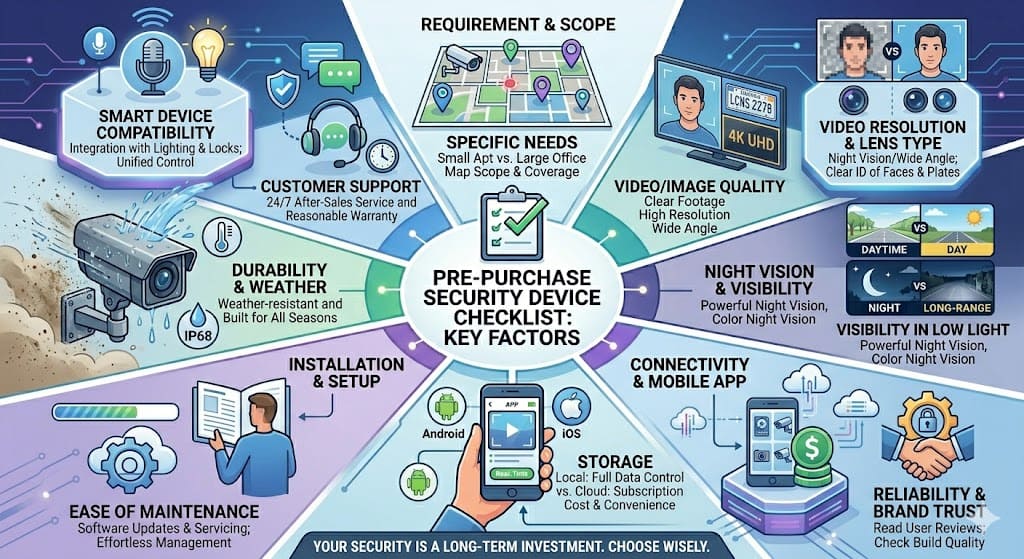
The first thing to consider is your specific security requirement. Not all spaces need the same type of protection. A small apartment may only require a basic camera and door sensor, while a large house or office might need a complete system with multiple cameras, motion detectors, and alarms. Understanding what you want to monitor and protect will help you choose devices that are suitable for your environment instead of overspending on unnecessary features.
The quality of video and image recording is another important factor, especially when buying CCTV cameras. High-resolution cameras provide clearer footage, making it easier to identify faces, license plates, or suspicious activities. Devices with at least Full HD resolution are recommended for most users. Additionally, features like night vision and wide-angle lenses ensure better coverage and visibility even in low-light conditions.
Storage options should also be carefully evaluated. Security devices typically store footage either locally, such as on an SD card or hard drive, or on cloud-based platforms. Local storage gives you full control over your data but may be limited in capacity. Cloud storage, on the other hand, allows remote access and backup but may involve subscription costs. Choosing the right storage option depends on your budget and how frequently you need to access recorded footage.
Another key aspect to check is connectivity and remote access. Modern security devices often come with mobile apps that allow you to monitor your property in real time from anywhere. This feature is especially useful for people who travel frequently or want to keep an eye on their home while at work. Before purchasing, ensure that the device is compatible with your smartphone and offers a user-friendly interface.
Ease of installation and maintenance is often overlooked but can make a big difference in your overall experience. Some devices are designed for simple plug-and-play installation, while others may require professional setup. If you prefer a DIY approach, choose devices that come with clear instructions and minimal wiring. Additionally, consider how easy it is to maintain the system, including software updates and hardware servicing.
The reliability and durability of the device are equally important. Security devices are often exposed to different environmental conditions, especially outdoor cameras. Look for products that are weather-resistant and built to last. Checking the build quality and reading user reviews can give you a better idea of how the device performs over time.
Compatibility with other smart devices is another factor worth considering. Many modern homes use smart systems such as voice assistants, smart locks, and lighting controls. Choosing security devices that can integrate with your existing setup allows you to create a more connected and efficient security system. This integration can enhance convenience and provide better control over your home environment.
Budget is naturally an important consideration, but it should not be the only deciding factor. Cheaper devices may save money initially but often lack essential features or durability. It is better to view security devices as a long-term investment and focus on value rather than just cost. Comparing different options and balancing features with price can help you make a smarter decision.
Finally, do not overlook the importance of customer support and warranty. A reliable brand should offer good after-sales service, technical support, and a reasonable warranty period. This ensures that you have assistance in case of any issues and adds an extra layer of confidence to your purchase.
Buying security devices is a decision that directly impacts your safety and peace of mind. By carefully considering factors such as your needs, device quality, storage, connectivity, and reliability, you can choose a system that truly protects what matters most. Taking a thoughtful approach before purchasing not only saves money but also ensures that your security setup is effective, reliable, and built for the long term.
