

Blog
Top Mistakes to Avoid While Installing CCTV Cameras

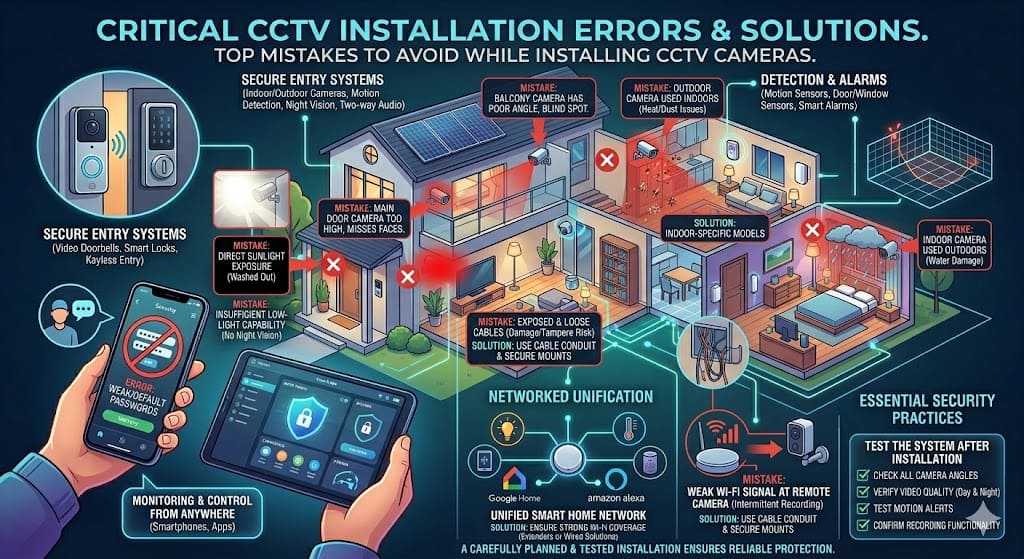
Installing CCTV cameras is an effective way to enhance the security of your home or workplace, but many people make critical mistakes during the setup process that reduce the system’s effectiveness. A well-installed CCTV system not only records incidents but also helps in preventing them. Understanding common installation errors can help you get the most out of your investment and ensure reliable surveillance.
Ignoring Proper Camera Placement
One of the biggest mistakes people make is installing cameras without proper planning. Placing cameras randomly often leads to blind spots, leaving important areas unmonitored. Cameras that are installed too high may fail to capture clear facial details, while those placed too low can be easily tampered with.
For effective surveillance, cameras should be positioned at entry and exit points such as main doors, windows, gates, and parking areas. The angle and height should be optimized to capture a wide view while still maintaining clarity. Proper planning of camera placement ensures maximum coverage and minimizes security gaps.
Choosing the Wrong Type of Camera
Another common error is selecting the wrong type of camera for a specific environment. Indoor cameras are not designed to withstand outdoor conditions like rain, heat, or dust. Similarly, outdoor cameras may not always be suitable for indoor use due to their size or features.
Trusted brands like CP Plus, Hikvision, and Dahua offer different models tailored for specific needs. Choosing the right camera based on location and purpose ensures better performance and longer lifespan.
Poor Lighting Consideration
Lighting conditions play a crucial role in video quality, yet they are often overlooked during installation. Cameras placed in areas with strong backlight, shadows, or insufficient lighting may produce unclear footage.
It is important to consider both daytime and nighttime conditions. Cameras with good low-light or night vision capabilities are essential, especially for outdoor areas. Proper positioning to avoid direct light exposure can significantly improve image clarity and usability of recorded footage.
Neglecting Storage and Backup Setup
Many users fail to plan how their CCTV footage will be stored. Without proper storage management, important recordings may be overwritten or lost. This becomes a serious issue when footage is needed for review or evidence.
Modern CCTV systems offer both cloud and local storage options. Selecting the right storage solution depends on your usage and budget. Ensuring regular backups and monitoring storage capacity helps maintain continuous recording without interruptions.
Weak Network and Connectivity Issues
For wireless CCTV systems, a stable internet connection is essential. Weak Wi-Fi signals can cause delays, interruptions, or even complete disconnection of cameras. This can result in missed recordings and unreliable monitoring.
To avoid this problem, it is important to ensure strong network coverage in all installation areas. Using routers with better range or adding Wi-Fi extenders can improve connectivity. In larger setups, wired systems may provide more stable performance.
Ignoring Security and Password Protection
Many people overlook the importance of securing their CCTV system itself. Leaving default usernames and passwords unchanged makes the system vulnerable to unauthorized access. This can compromise both privacy and security.
To protect your system, always use strong and unique passwords. Regularly updating the system’s firmware also helps in preventing potential cyber threats. A secure system ensures that only authorized users can access the footage.
Improper Cable Management and Installation
In wired CCTV setups, poor cable management can lead to long-term issues. Loose or exposed cables are more likely to get damaged, which can disrupt the entire system. It also makes maintenance difficult and creates an untidy appearance.
Properly organizing and securing cables not only improves durability but also ensures consistent performance. Professional installation can help avoid such issues, especially in complex setups.
Not Testing the System After Installation
A common mistake is assuming that the system will work perfectly after installation without testing it. Skipping this step can leave unnoticed problems such as incorrect angles, poor video quality, or recording failures.
It is important to check all cameras, review live footage, test recording functionality, and ensure that motion alerts are working correctly. Regular maintenance and testing help in identifying and fixing issues before they become serious problems.
Conclusion
Installing CCTV cameras is a valuable step toward improving security, but avoiding common mistakes is essential for achieving the desired results. From proper placement and choosing the right equipment to ensuring secure access and reliable connectivity, every detail matters.
A carefully planned and properly installed CCTV system provides not just surveillance but real protection. By addressing these common errors, you can ensure that your security system works efficiently and gives you complete peace of mind.
